
Attention to Detail Assessment for Hiring
Assess a candidate’s ability to identify errors, compare information accurately, and work carefully with detailed data before making a hiring decision.
- Format
- 24 multiple choice
- Time
- Approximately 12 minutes
- Result
- Structured overall and dimension-level evidence
Original customer ID: AC-584291. Entered customer ID: AC-584219. Which statement is correct?
Representative example—not a live assessment item. The response pattern shows the kind of job-relevant evidence the assessment creates.
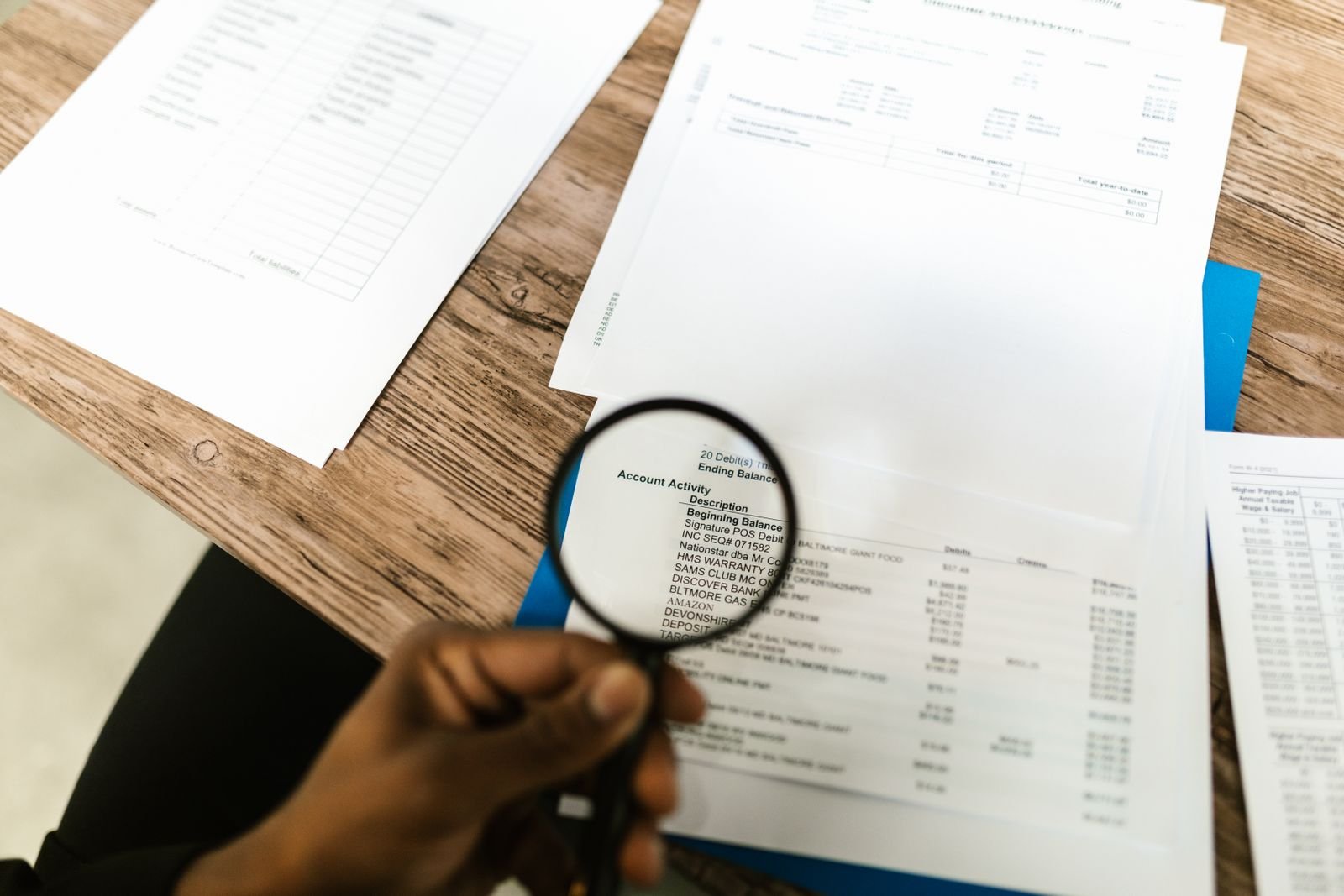
What is an attention to detail assessment?
An attention to detail assessment is a pre-employment test used to evaluate how accurately a candidate reviews, compares, and processes detailed information in work-related tasks. Rather than testing general knowledge, it measures a specific, practical ability: how consistently someone notices errors, catches discrepancies, and follows instructions precisely, even under normal work pressure.
Employers use this assessment because attention to detail is difficult to judge from a résumé or a short interview, yet it directly affects the quality of everyday work in roles involving data, documentation, transactions, or customer records. A candidate who interviews well can still make costly errors in detailed tasks, and a strong attention to detail score gives hiring teams evidence a résumé alone cannot.
This assessment is typically used early in the hiring process, either as part of an initial screen or alongside other role-relevant assessments, so results are available before the interview stage.
What does the assessment measure?
See the defined dimensions separately, so strengths and areas to verify are easier to discuss before the interview.
Error Detection
The ability to identify incorrect, inconsistent, or miscalculated information within a task.
Data Comparison
The ability to compare records, numbers, or documents accurately and spot where they differ.
Instruction Accuracy
The ability to follow detailed, multi-condition instructions without missing a requirement.
Consistency Checking
The ability to identify discrepancies across related pieces of information, such as records that should match but do not.
What candidates can expect
Candidates complete 24 multiple-choice questions in approximately 12 minutes. Each question presents a short, realistic work scenario, such as comparing two records, checking a calculation, following a selection rule, or spotting an inconsistency across related data. Instructions are shown before each question, the assessment can be completed on desktop or mobile, and progress is saved automatically.
More sample questions
Representative examples created for this page, not questions from the live assessment bank. Open each item to compare the options and review the answer.
Error DetectionInvoice: 4 units × $18.50 = $74.00. 3 units × $12.00 = $36.00. 2 units × $27.50 = $55.00. Total: $165.00. Which statement is correct?
- AThe first calculation is incorrect
- BThe second calculation is incorrect
- CThe third calculation is incorrect
- DAll calculations are correct
Correct answer: D. All three calculations and the $165 total are correct.
Instruction AccuracyInstruction: select records that are marked Priority AND have been waiting longer than 48 hours. A: Priority, 51 hours. B: Not priority, 63 hours. C: Priority, 39 hours. D: Priority, 72 hours. Which records should be selected?
- AA and B
- BA and D
- CB and D
- DA, C and D
Correct answer: B. Only A and D meet both conditions.
Consistency CheckingCustomer record: Order 84127. Invoice 84127. Dispatch 84172. Payment 84127. Which record is inconsistent?
- AOrder
- BInvoice
- CDispatch
- DPayment
Correct answer: C. The dispatch record contains 84172 instead of 84127.
When to use an attention to detail assessment
Use this assessment when accuracy, careful information processing, and error detection are important parts of the role.
Before interviews
Use results to identify areas worth exploring, rather than relying on résumé claims about being detail oriented.
During candidate screening
Add structured evidence beyond CV experience, especially for roles where small errors carry real cost.
When comparing finalists
Assess candidates against the same consistent criteria instead of relying on interview impressions alone.
Roles where attention to detail matters
Administrative Assistant, Executive Assistant, Accountant, Bookkeeper, Financial Analyst, Customer Service Representative, Data Entry Specialist, Operations Coordinator, Quality Assurance, and Recruiter.
How the Attention to Detail Assessment is scored
Each correct response earns one point. Questions are mapped to one of four dimensions, and performance is calculated overall and by dimension. Results are shown as descriptive performance bands rather than percentile rankings.
These bands describe performance on this assessment. They are not population percentiles and do not predict job performance on their own.
Strong
Consistently accurate performance across the assessed tasks.
Moderate
Generally accurate performance, with some errors or inconsistency.
Developing
Lower accuracy across the assessed tasks, an area that may be worth verifying further.
How should employers interpret attention to detail results?
A strong result suggests the candidate consistently caught errors and inconsistencies across the assessed tasks. A moderate result suggests generally accurate performance with some inconsistency worth exploring. A lower result does not automatically mean a candidate should not be hired. It is a signal worth discussing in the interview, not a decision by itself.
Assessment results should be considered alongside the requirements of the role, structured interviews, experience, and other relevant hiring evidence.
What you receive after a candidate completes the assessment
View Sample Candidate ReportInterview questions for evaluating attention to detail
“Tell me about a time you identified an error others had missed.”
Explores real-world error detection beyond the assessment context.
“How do you maintain accuracy when working with large amounts of information?”
Explores data comparison and consistency checking in practice.
“Describe your process for checking your work before submitting it.”
Explores instruction accuracy and self-review habits.
Assess attention to detail alongside other skills
- For administrative hiring: Attention to Detail, Verbal Reasoning, Communication Skills, and Administrative Skills.
- For finance roles: Attention to Detail, Numerical Reasoning, Critical Thinking, and Microsoft Excel.
- For customer service roles: Attention to Detail, Communication Skills, Customer Service, and Situational Judgment.
How the assessment is developed
This assessment is developed using established principles of job-relevant item design. Its questions are built around four defined attention to detail dimensions and realistic workplace tasks, such as comparing records, checking calculations, following selection instructions, and identifying inconsistencies.
We do not currently have a formal independent psychometric validation study, an established normative sample, or a published reliability coefficient for this assessment.
Results are intended to provide one source of structured evidence, and should be interpreted alongside interviews, experience, references, and other job-relevant information. We will add reliability, validity, normative, and fairness evidence to our methodology documentation as those studies and datasets become available.
Frequently asked questions
What is an attention to detail assessment?
A pre-employment test that measures how accurately a candidate reviews, compares, and processes detailed information in realistic work tasks.
How long does the assessment take?
Approximately 12 minutes for 24 multiple-choice questions.
What does an attention to detail test measure?
Error detection, data comparison, instruction accuracy, and consistency checking.
Which jobs require strong attention to detail?
Roles involving data, documentation, transactions, or customer records, including administrative, finance, operations, customer service, and data-entry positions.
How are candidates scored?
Correct responses are calculated overall and by dimension, then summarized as Strong, Moderate, or Developing.
Can I use this assessment before an interview?
Yes. Results are available as soon as a candidate completes the assessment, so you can review them before scheduling an interview.
Should assessment results determine whether someone is hired?
No. Results are one source of structured evidence and should be considered alongside interviews, experience, references, and other relevant information.
Can I combine this with other candidate assessments?
Yes. Attention to Detail is commonly paired with assessments such as Numerical Reasoning, Communication Skills, or Customer Service depending on the role.
Roles that commonly use this assessment
This assessment is most useful when its evidence matches a role requirement. These role guides already include Attention to Detail in a broader hiring plan.
Use it in context. Match every assessment to a job requirement, combine complementary evidence, and verify important gaps in a structured interview. How to choose a focused battery.
Explore Attention to Detail before the interview.
Contact our team to start your Attention to Detail assessment and get structured results for more focused interviews.